Gold, Frankincense, Myrrh, and Brain Damage

Happy Holidays! Froeliche Weihnachten! Happy Hanukkah! Happy Kwanzaa!

What is Santa/Kris Kringle/Krampus/Monito-monita, that crazy, overgrown elf/Viking who has nothing to do with a mythical baby born in a stable bringing you this winter solstice/Christmas/yule?

I already got my gift, but nothing like what the three wise men brought across the desert. At the beginning of November I saw a new neurologist who agreed to give me everything that I seemed to be missing: an upright MRI, a neuro psych test, and keep me on as a patient, as confusing as my case is. Three days after our initial meeting the doctor who administers the neuro psych tests had a cancellation so I didn’t have to wait four months. A neuro psych test is a series of tasks to evaluate my real brain functionality – not just the few words a doctor might ask you to remember a few minutes later, like “pencil,” “dog,” and “purple.” I had to take many different kinds of timed tests, including drawing, making linear connections, making word associations, and answering personality questions. That’s the short version.

I didn’t have any problem with drawing pictures from memory. I was shown simple lines and boxes and then given a blank piece of paper a half hour later and could draw them in sequence perfectly. However, when it came to things like giving a list of words that began with a certain letter in the space of 60 seconds, it was like the bottom of my brain fell out. I could only give four words for the letter “A,” and they were very simple words like “an” and “apple.” There were four letters total, and each letter was a challenge. I can only remember the letter “A” at this point.

There was another exercise where the tester gave me a list of words that included pieces of furniture, animals, and modes of transportation. Every time I repeated the list back, I always tried to give it back in order, I never tried to group everything together in like groups. It never occurred to me. However, if I had full functionality, it probably would have. I also could never remember more than a few words, even though I’m guessing the list was repeated more than 20 times.

They wanted to see how I could do with repeating numbers back, so they started with three numbers, then four, then five. As soon as I got to five, I started struggling. At six, I couldn’t repeat any numbers, not even the last two or three of the group. Again, it was like the bottom of my brain dropped out.

There were many other tests, but in the interest of space and to save some face, I’ll stop there. You get the idea.

A few weeks later when I could meet with the doctor who administered the test, she confirmed what I dreaded hearing but suspected: I have brain damage. Since I’ve never had an evaluation done before there’s nothing to compare it to, but she said she could tell that in some areas my knowledge base and functionality was “superior,” or above the level of a college-educated woman. However, the brain damage affected my memory and speed and speech and brought those areas down to true mental impairment.

A few days ago I went into the office for part II of my follow-up to look at the actual scans of my upright MRI. My MRI did not look good.
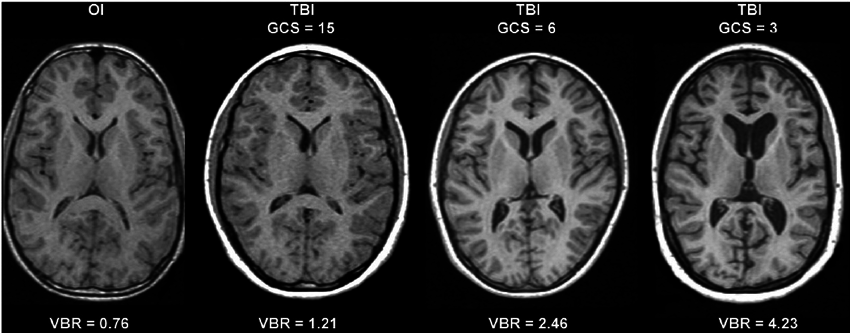
normalventricles

Above is a progressive MRI scan of a brain (not mine), moving down from top to bottom. As you move further down, you notice that the part in the middle gets larger and darker; that’s the ventricles. They are the four chambers that are the gold standard for figuring out if there’s a problem with CSF in the brain. This is what normal looks like.

Unfortunately, I don’t have any ventricles left. All of them have collapsed. My brain is pressing on the brain stem and I’m having all kinds of unusual problems, like my legs suddenly jerking if I’m standing and I look down briefly. Of course I have the problems I’ve always had, like the vertigo and the fatigue, and that pesky facial droop and ptosis (pronounced “toe-sis”). My new neurologist insisted that the disappearance of my ventricles must mean that I’m overdraining, but I knew that I must be suffering from Slit Ventricle Syndrome, and it means just the opposite – the pressure is crushing my brain.

UCLA has a pretty good explanation of Slit Ventricle Syndrome. I’m 100% certain that my shunt is “nearly blocked but barely flowing.” I always, always feel like my intracranial pressure is extremely high. It’s exhausting. So for now, it looks like I have Slit Ventricle Syndrome, and I’m not sure if this would have been picked up before this point – at least not two or three years ago, even though the symptoms are the same. I don’t recall that my ventricles have looked this horrific in all of my 20+ prior MRIs.

Also troubling is trouble brewing at the back of my skull. In 2013 I had two cisternoperitoneal shunts placed when my neurosurgeon was trying to find anything, anything, that my body wouldn’t reject. After we removed those and I ended up with a ventriculoperitoneal shunt, he barely got the old one out after a lot of scraping and pulling because of the scar tissue that had built up along the tract. A surgery that should have been an hour and a half turned into five hours and I was left with a huge highway of bruising from my head to my abdomen.

Unfortunately, he thought that it wasn’t detrimental to leave scar tissue in my head, and in fact may help to plug the burr hole where he drilled for surgery so I wouldn’t have any leaks. I knew what it was like to have a CSF leak; 2014 was incredibly painful when I had a leaking shunt for that whole year. The scar tissue has been increasing in diameter and it’s now growing like a tumor. From what I can tell it’s about the size of a quarter, and it’s pressing on the area of the brain that deals with memory and speech. It’s actually a long rope but it’s got a huge bulb, and if I press on the burr hole, it yanks on the area it’s attached to right behind my ear.

In plain English: My brain is being crushed. My shunt isn’t working. I’m growing my own tumor that was started by my scar tissue.

My challenge is that I’m allergic to the shunt materials. Also, now that the scar tissue is turning into a growing tumor, can we take it out without creating a leak, and when we pull it out, will the area it’s damaging have permanent damage or will it heal?

Also, can I fucking qualify for disability now? Everything that I’m reading about Slit Ventricle Syndrome says that it’s a permanent condition – there’s no going back.

Within the next few weeks (because of the holidays messing everything up) I’ll find out when I can get in with the best neurosurgeon in the Minneapolis/St. Paul area. He came highly recommended by other hydrocephalus patients when I attended the hydrocephalus conference including the mother of Olivia, the young woman who had 123 surgeries since birth and who is now aged 20.

I am also in the process of finding an occupational therapist for an evaluation that can be included in my records for my attorney and disability case.

I’m going to share the most personal thing I possibly can and have up to this point, because some of you may doubt how much this has affected me because I have created coping mechanisms. It has taken me two full days to write this post and writing even the simplest words is sometimes a struggle. But the hardest thing for me to do to date was to send out holiday cards. At one point I had to stop writing for about a half hour because I broke down in tears. Hand writing words without the benefit of being able to go back and erase them and rewrite them like I do in the computer almost caused me a panic attack because I could no longer remember how to write even single-syllable words. For the people who did get cards, there was a lot more crossing out and scribbling than I would have liked. Maybe you noticed that I started to write an “E” where there should have been an “L” first. Sometimes I couldn’t even remember how to write my own name correctly – I would skip letters.

I don’t have all of the answers. I still – STILL – don’t know what’s causing the imbalance with the CSF in my brain. I don’t know if taking out the scar tissue/tumor is going to alleviate the memory and speed problems. I don’t know if I’m ever going to be able to tolerate an appliance in my body. I definitely don’t want to hear, “But you look fine!” or “Have you tried _____?”

.


This is a Test

Another chronic illness blogger has been kind enough to let a bunch of us tell our stories on her site, and late last week my most up-to-date info was included. She has indicated that she may discontinue the series if she no longer has parties interested in being part of the project, but there are so many of us out there that I would be surprised if the well ever dried up.

From This Point. Forward.

Today was a really big day in my little alien world. I finally got the upright MRI that I’ve been asking for for 6.5 years. In all of the 56 doctors that I’ve seen, it has only been the most recent neurologist who hasn’t fought me on my request and put the order in.

So I got strapped into a chair and a cage was lowered over my head and screwed into place like I was Hannibal Lector. Like I was ready for some football and to call out some huts! I was sandwiched and squished between two huge, white panels, a bar propped between the panels for my hands and then one lower for feet to rest on to make my very own roller coaster ride more comfortable.

A couple of times the tech buzzed in and said, “I’m picking up movement. Try to keep very still.” I had explained to her that I sometimes have trouble with tremors in my neck when we were going over the questionnaire, but maybe she’s heard that line before and doesn’t think it’s important to remember. I breathe with my diaphragm, so at a break between segments, I moved my arms as far away from my torso as far as the sandwich bread slices would allow me – that way there was less of a chance that my smushed arms would move my head when I breathed.

The tech had given me the option of tilting the chair back at 30-45 degrees, but I explained that it would compromise what we are trying to catch on imaging, so I had to stay completely upright. The MRI takes about 40-45 minutes, and to make sure the pressure in my skull was really high, I exercised my arms for about five minutes both before the cab picked me up, and then again when I changed my clothes. All I have to do is mimic the bicycle motion with my arms like what I do in PT and I nearly go completely blind from the pressure in my skull. This is why I can’t exercise. I would probably give myself seizures.

At the end of it when I was extricated from the face trap/sandwich boards, I got up to walk and ended up stumbling around like a cat coming off of anesthesia. I had to have a lot of assistance to walk back to the room where my cane was waiting for me. I might have said, “No, I don’t need a fucking walker.” This scan had better not let me down.

Nothing Like Designer Jeans

I’m listening to Pandora right now, and Whitesnake’s “Is This Love” happens to be playing. What were the hottest jeans from 1988? Maybe they were Guess?, maybe they were Girbaud (with the little loop at the top of the fly). I remember that it was important for guys to have Levi’s, at least in the little town where I was attending school when Tawny Kitaen was straddling two Jaguars.

There’s trends in medicine too. Remember how just over a century ago, no one really had a grasp on how important it was to wash your hands? And remember how 80 years ago, antibiotics were just around the corner, but before they were available to the general public, syphilis could very well be a death sentence? But it’s not so much trends as it is that we become more aware and educated.

Medicine attempted to treat PTSD in soldiers and document it for as long as wars have been fought. Different names have been attached to it; “Soldier’s heart” for the Civil War, “shell shock” for World War I; and “Combat Stress Reaction” for World War II.

After WWII, the American Psychiatric Association worked to put together a label that would apply to all symptoms that would appear as a result of traumatic events, not just war. It has actually been through five revisions to date and includes four different types of symptoms: reliving the traumatic event (also called re-experiencing or intrusion); avoiding situations that are reminders of the event; negative changes in beliefs and feelings; and feeling keyed up (also called hyperarousal or over-reactive to situations). Most people experience some of these symptoms after a traumatic event, so PTSD is not diagnosed unless all four types of symptoms last for at least a month and cause significant distress or problems with day-to-day functioning (see PTSD: National Center for PTSD ).

Since I’m part of the Chronic Illness Bloggers network, I’ve been able to read a lot of my fellow bloggers’ unique perspectives, and more than once I’ve seen references come up about PTSD in medical settings. I cannot believe what some of you have had to endure. I worry about putting on my Girbaud jeans and raising my hand and saying “Me too,” but after having many discussions with my counselor, she has confirmed that I indeed have PTSD triggered by my experiences brought on by this mystery disease.

Was there one big bang? I don’t think so, just like there isn’t one big battle in war, but a whole war. There were certain things that were especially traumatic. The time that my neurosurgeon stood in the doorway of my hospital room on the night of my birthday in 2013 after my fourth surgery and told me he would have to send me home nearly blind because he was just in there and it had to be something else, not a shunt failure was especially traumatic (turns out that it was a kink in the shunt that developed that would not have been discovered if I would not have thrown a hysterical fit to have a nuclear shunt study performed).

One story that I told to my counselor in this week’s session happened January 2014. 2013 was my big year of surgeries – six in all. I got to know my symptoms of shunt failure really well, plus I figured out that I was making copious scar tissue and adhering the shunt to my chest and abdominal wall. At various times I also leaked great big pools of CSF out of my spine so that I had a softball-sized vat of fluid sitting on my back, and a more dangerous situation of having a shunt in my brain and another one in my back, making it harder to control pressure.

My last surgery in 2013 was December 21st; that was when my neurosurgeon finally believed me after 2.5 years that I was allergic to the shunt, when he saw for himself that my abdomen was red and inflamed, like a “war zone,” as he put it. I told him that I needed to see an immunologist and a rheumatologist, but he said that I was “taking it too far.”

A month later, my shunt clogged or strangled again and it was adhered to my abdomen by scar tissue. I went to the ER and saw the on-call neurosurgeon, someone I had never seen before but who was with Barrow Neurological like my neurosurgeon and had access to all of the notes from my surgeries and could talk to my neurosurgeon. I demonstrated for him my usual problem when my shunt isn’t working and my symptoms come back: when I’m upright, my face is paralyzed and I can’t open my eyes; when I lay down, my eyes immediately open because the fluid moves away from the brain stem. When I sit back up, the fluid moves back to the brain stem and presses on the nerves again.

The neurosurgeon went away. The regular ER doctor came in and said I had a clear case of a classic migraine headache. I told him it was ridiculous and asked if anyone read my notes from my chart from all of my other admissions and surgeries, and he said he didn’t know, but that was what the on-call neurosurgeon said. Then he handed me a prescription for opioids. I was absolutely floored. I demonstrated for him what happens when I put my head parallel to the floor – my eyes open – and what happens when I’m upright, and asked him if that’s “typical migraine symptoms,” and he said he didn’t know, but that was what he was told, so that was it. I told him it was bullshit (never raising the volume of my voice, by the way). I told him that if they discharged me, I was going to turn around and ask to be admitted again. He told me they would refuse to treat me. I asked him why he prescribed pain medication for me when I wasn’t in pain, my shunt was simply clogged. He said that with patients with clogged shunts, they always get headaches, so if that was really my problem, I should have a headache. Then he left.

I was openly crying and shaking. The nurse came in and her whole demeanor toward me changed. She told me that I had to stop being abusive to them, they were just trying to help me; all the while I couldn’t even speak, I was so stunned. Then she yanked the IV out of my arm without putting pressure on the puncture so that I bled all over and then snidely said, “Oh, look at that, you’re a bleeder!” I just sobbed harder. She left the curtained room and I shut the curtain and cleaned myself up and managed to get changed. She came back with the discharge papers. I asked her if she could walk me out of the maze of the ER back to the lobby. By then it was 4 a.m. and quiet. She told me that she was too busy and that I had to find my own way out. My room was next to the nurse’s station, and many of the night ER staff had congregated there and were observing the exchange. They could also see that I had a cane and paralyzed eyelids that were mostly closed; one offered to help, but my nurse said, “She’s fine.” Another person asked me if that was true, but I couldn’t speak. I just kept walking. You could have heard a pin drop.

I finally made it out to the now-empty ER lobby and managed to call a cab and directed my face to the windows so I could watch for the familiar colors of the cab company. When the pressure gets bad, that’s all I can do – make out shapes and colors.

When I contacted my neurosurgeon’s office after that visit, I discovered that he actually upheld the on-call neurosurgeon’s decision to diagnose me as having a migraine episode, even though my neurosurgeon had been following me for 2.5 years and knew my symptoms just as well as I did at that point and performed all 8 of my surgeries to date. Everything that I have told my neurosurgeon that has been wrong with my body has been completely correct, and for him to suddenly go with something as far-fetched and outlandish as to describe this as a migraine episode immediately caused me to distrust him deeply. Before I would have talked to anyone who would listen about how great he was about thinking outside the box; after that I only hoped to survive.

Because of this horrible ER visit, I went home and started stretching my torso because I could tell that the shunt was adhering again to my abdomen only 3-4 weeks after the previous surgery. It was the only thing I could think to do. In the process, I managed to stretch so vigorously that there was a tug of war internally and I created a break in the shunt, which led to a leak…and because my neurosurgeon finally conceded that my demand to get an immunologist and a rheumatologist involved in my care was actually very practical, he refused to fix my leaking shunt for almost a year, which was EXTREMELY painful.

But that’s another story.

Back to PTSD. Post Traumatic Stress Disorder isn’t reserved for those who only experience war, or even a natural disaster. It certainly applies to anyone who has been abused in a relationship.

And it certainly applies to me. And I’m not even done with the war. I’m not even “post” anything yet. 

2016-10-01-12-51-21

Amateur Hour: How Vanderbilt/NIH Undiagnosed Diseases Network Failed Me

Earlier this year, I worked for four hours sorting and copying approximately 350 pages of medical records to send to Vanderbilt University in Tennessee when the coordinator for the NIH Undiagnosed Diseases Network notified me that my case was being sent there for review. I divided everything by year and specialty. I inserted notes and highlighted everything that should be of special interest.

I took it as a bad sign when I received an email that was poorly written, and rightly so:
I need you help with some missing records the UDN has requested on you. We are missing the records from the Movement Disorder Neurologist and  also labs associated with Thyroiditis Workup are not complete. Please request these records be faxed directly to us at *********** or **********. We cannot move forward with reviewing your case until we have these records. Please feel free to contact us if you have any questions.” They weren’t actually missing the records from the movement disorders neurologist; the EMG results were included in what I forwarded to them. (Special note: capitalizing random words is an elementary mistake in and of itself and certainly doesn’t belong in official correspondence.) I wrote back and asked what needed to be obtained for the thyroid workup because I was going in for an appointment in the near future and could have tests ordered. However, I didn’t hear a response for weeks. Their suggestion to contact them with questions was not sincere because they didn’t respond to repeated calls or emails for three weeks total. I went to my appointment and guessed what they would want ordered, then forwarded them the results.

It didn’t matter, though. Last Thursday July 14th I received a letter in the mail from the head of the team saying that after a “stringent” review of my case, they were turning me down. They decided that because I have a strong history of autoimmune diseases that I must consider myasthenia gravis.

Here’s the problem, though: I considered myasthenia gravis already back in 2010, and again this year, and it has been ruled out by tests including the painful tasing of my face in April. All of those notes and tests were included in my paperwork. The 53 doctors who have seen me so far have positively said that I don’t have that. I also say I don’t have that. I have not found any documented cases where patients have received a working brain shunt to move CSF to relieve the symptoms of MG. I have hundreds of pages documenting my numerous symptoms and surgeries, and instead the Vanderbilt team chose to tell me to go back to the U of MN doctors (who, by the way, told me to go away and not come back) to get treatment for MG because “they would know how to treat me.” I am not allowed to appeal this decision or have any other team look at my file. The UDN door is forever closed to me now.

The next two paragraphs I’d like to address to that team directly:

Fuck you, Vanderbilt, you backwoods amateur cocksuckers.

This is what I don’t have: myasthenia gravis, lupus, MS, normal pressure hydrocephalus, communicating hydrocephalus, Creutzfeld-Jakob, IgG4 proliferation, scleroderma, pseudotumor cerebri, diabetes, secondary tremors, tumor, chiari malformation, or rheumatoid arthritis, among other things. After seeing so many doctors and going through hell and having to research A LOT on my own, Vanderbilt, your suggestion makes me think that my file landed in the hands of a beginner’s group. I’m way ahead of you, by years, and I didn’t even finish my medical degree. Every single one of you needs to go back to studying onion skin cells under your 10x microscopes because you obviously can’t handle the hard stuff.

As I feared, Vanderbilt chose to give much weight to the three doctors in the circle jerk at the U of MN claiming I had some sort of “facial weakness” that would imply MG and completely ignores the issue with the cerebral spinal fluid, which in turn ignores the vertigo, fatigue, slurred speech, numbness, and cognitive problems. It would also imply that I implanted a shunt for the fun of it – because I want something that I’m allergic to that causes a shit ton of pain in my body. It also means that they completely ignored the notes that indicated that my symptoms subsided when I had working shunts. Now I am back to the starting point, meaning no one knows what I have or how to help me. (Please note: I am still going through testing for the mast cell activation syndrome and I am watching the results slowly trickle in; my guess is that I’m going to have to repeat everything because nothing is extraordinary in the outcomes at this point.)

I also still don’t have disability money coming in. My hearing won’t be set until about a year from now, but my chances are only about 10% in my favor at the moment because I still can’t get a diagnosis or the NIH to work with me. I’m not being dramatic, I’m being realistic. My attorney would tell everyone the same thing.

If you have read this post in its entirety, thank you. I’m not asking for advice; that’s not how I operate. This is just one of those times where the Carousel of Crap feels extra shitty.

You Know, Like The Nasal Spray

Tonight was supposed to be a date night with the boyfriend. Unfortunately, I’ve been nursing a headache all day that has been getting progressively worse, so we’re postponing until tomorrow night and I have vowed to not make myself ready for public consumption tonight even a tiny bit. Instead I’m listening to Enigma and thinking about how to put all of this week’s news together.

When I was little, I had a lot of problems with asthma and allergies. There was one time I had gone hog wild with the Cracker Jack tattoos and then went into anaphylactic shock shortly after from who knows what and was rushed to some kind of urgent care (though back in the 1970’s it wasn’t called that), and my mom and I remember that the doctors and nurses were momentarily amused to discover how enthusiastically I had stamped them onto my arms and legs when they hurriedly stripped me down to shoot me up with multiple adrenaline shots. I always had allergic reactions that seemed to come out of nowhere. I would have hives show up on my little cheeks that couldn’t be explained. We tried so many things, including eliminating dryer sheets and perfumed laundry soap. I could only bathe with certain soaps – I remember being disappointed that my friends had fun soaps with glitter, while mine tended to have real oatmeal and vaguely resembled excrement.

Often my allergies would turn into full-blown infections. My little body was so worn out from the allergic reactions that the microbes had an easy time of taking over, every time. I know now that specifically I am even more vulnerable because I have both IgG3 and IgG4 immunodeficiencies, so I cannot fight off infections like other people can, and my infections will always last longer.

One of the many things I always struggled with is cigarette smoke. I knew from a very young age that I was allergic to it; it wasn’t just that I didn’t care for the smell, but that it made my throat close up, like I was having an allergic reaction to it, much like what people experience when they are very allergic to cats (a more common allergy than dogs), or when they have a peanut or egg allergy. After being exposed for a few hours to cigarette smoke, it’s inevitable that I will develop an infection. Three of my four parents were smokers and so I always had sinus infections, bronchitis, ear infections and pneumonia growing up. Nowadays I’m thankful that most places in the U.S. have adopted laws banning smoking in indoor public places.

Animals are tough too. We had a cat that I loved very much but we ended up having to re-home her with our aunt after it was confirmed just how allergic I was to her; our dogs were outside dogs at my mom and step-dad’s house, but my dad and step-mom had an indoor dog. It seemed like I always had a sinus infection and/or bronchitis and/or an ear infection.
There are other allergies that I have noticed over the years that are not the usual suspects for most people. For instance, I get hives all along the entire surface of my body that has been in contact with brand new furniture. I’m not sure if it is the dye in the fabric or the chemicals in the padding that I’m allergic to, but it’s miserable. Also, commercial perfumes that the general public wears and Lysol are incredibly toxic to me. (When I used to work in the cubicle farm at Bank of America in Phoenix, I used to stand up and yell “Stop spraying!” if a co-worker started spraying Lysol in his or her cube because my throat would immediately start closing up. Everyone thought I was nuts.)

Lately I’ve been having some trouble with my pulse being about twice the normal rate and with my blood pressure being elevated. I also have burning and a metallic taste in my mouth, constant heartburn that no one to date has been able to pinpoint the source of, and of course the constant problems with my CSF, memory, word recall and crushing fatigue.

Back in October of 2015 at the urging of a friend, I made an appointment with Dr. Lawrence Afrin, who is fairly new to the University of Minnesota staff; he used to live in South Carolina and transitioned to Minnesota starting in 2013. When I moved here a year ago, I was trudging back and forth between appointments with doctors and labs and scans, and didn’t think much about what he had to offer me, quite honestly – I mean, I thought that what I had going on was better addressed in the areas I had already been concentrating on: neurosurgery, neurology, immunology, rheumatology. I couldn’t even find a regular primary care doctor who could handle me. I made the appointment anyway, but Dr. Afrin is in high demand, and they booked me for ten months later. I didn’t give him a second thought.

A month ago I received a call from his office with the offer to move my appointment to the end of June. I accepted. In the meantime, the same friend who urged me to make the appointment also bought me his book and sent it to me, so I quickly started reading it because of the pending appointment – “Never Bet Against Occam.” Within the first 20 pages I realized that I was reading about my own puzzling history. I started to assemble my list of questions and completed my 3-ring binder for the appointment.

Dr. Afrin is considered the national expert on a newly identified disease called Mast Cell Activation Disease (or Syndrome) or MCAD (or MCAS). It has only begun to be identified in the past 8 years, and he has been at the forefront of the movement to get it nailed down and classified. Everyone has mast cells. Everyone with this condition has a “normal” amount of cells, but they act in a very abnormal way. For some people, maybe it’s normal for them to have an allergic reaction to a mosquito bite. However, if they go into anaphylactic shock from the mosquito bite, then that might be considered MCAD if the actual number of mast cells didn’t increase.

Dr. Afrin first read through my records. Occasionally he quietly chuckled to himself as he read. At one point I asked him what was funny; he said that the signs I had MCAD were quite obvious. I told him to wait until he got to the part where I demanded to get azathioprine to try to stop rejecting the shunt, because I came up with that on my own, no one suggested it to me (I found out from his book that he prescribes chemo drugs such as azathioprine to MCAD patients in an attempt to try to find the right treatment).

In another section, he stopped and said, “Oh, Dr. T. here said that you have a mast cell disorder.” I said, “He read that I was coming to see you in the future. Let’s just ignore everything he said because he misdiagnosed me, shall we?” He laughed, but then later said I shouldn’t be so hard on my doctors in general because their main goal is quantity, not quality. I didn’t tell Dr. Afrin that he was my 53rd doctor at that point. I also didn’t want to go into an impassioned speech about how difficult it has been to lose my ability to work, to lose my house and car, my independence, and my sense of self-worth, all because doctors thought my case was too difficult and they just wanted easy cases.

Dr. Afrin thanked me for putting together such a complete medical history of the last six years. We talked about my life from birth to present and what were probably the signs of MCAD from the very beginning.

Here’s the plan: He’s going to request the biopsy samples from my upper GI (that I insisted on getting done on my own because I’ve been trying to figure out where this horrible acid reflux is coming from) so that they can be stained with the special stains that can show the concentrations of the mast cells. I’m going to have a bunch of blood work done next week. I’m also going to be sent home with a collection container that is going to live in my fridge for 24 hours. Can you guess what it’s for? Not Kool-Aid! Urine that I have to collect for 24 hours worth of peeing. That’s right. Then I have to transport that back to the lab, but first I have to pack it in a zip lock bag, pack it in ice, and then put it in a cooler. The urine has to stay cold or the components that have to be tested begin to degrade and become useless.

My sister and I had some good laughs over the whole refrigerated urine thing. First of all, I’m a bit of a germaphobe – partly because of the time I spent in nursing school and specifically in microbiology and all of that in-depth studying of bacteria, and partly because I know my immune system is weak. Second, I’m going to have to carry the cooler in my left hand because I have to walk with my cane in my right hand. Right now my left shoulder is in really bad shape because the tendons are likely frayed. What if I drop the cooler of urine? Am I destined for YouTube infamy when the bucket-o-urine splashes me in the face?

I’m thankful for this person steering me to Dr. Afrin. I’m trying not to get too excited because even though he’s 99% certain that I have MCAD, I’ve been down the 99% certain road before a few times, and it’s very emotionally draining to get misdiagnosed.

I’m Just The Patient

Today was my big appointment with the movement disorder neurologist at the U of Minnesota, and it was decidedly anti-climactic. My first impression was that he was a young version of Derek Jacobi, pictured here:
Derek Jacobi
All of the doctors seemed to be excited that I was scheduled to see this particular one and told me repeatedly how thorough he was. In fact, I was supposed to see him over a month ago, but he looked over my file a few days before I was due in and instead insisted I get my face tased (with an EMG) before seeing me, which pushed my appointment back so that he could rule out myasthenia gravis (a second time). I knew I didn’t have it as of 2010 and I still don’t.

This doctor was short on bedside manner, so I immediately shortened my answers and didn’t elaborate on anything. We went over my family’s extensive history of autoimmune diseases. He made me walk and do things with my eyes closed to deliberately make me fall (which made me sweat and because I was under so much stress, the tremors started up almost immediately). He shook my shoulders, sending white hot pain through my left shoulder that I’ve been going through PT for but am going to get an MRI for after next Friday because I’m not healing – I spent three years laying on that shoulder because all of my surgeries were done on the right side for that length of time, and the pressure really messed up the tendons and ligaments.

After all of that, the doctor told me that his nurse gave me the website in December that I should have checked out on movement disorders. He must have seen my eyes glaze over and the stubborn set in my chin because he left the room and returned with screenshots of the website. I politely folded them into squares and stuffed them into a pocket in my purse. He said that a doctor from July of 2015 believed that I have a facial movement disorder. I told him it was news to me, since the only thing that was said to my face was that I wasn’t a good candidate to have surgery to relieve the pressure on my optic nerves. This doctor said that the other doctor may have chosen not to tell me that I have a movement disorder because there’s “nothing that can be done about it anyway.”

This entire conversation is deeply flawed. First, I don’t have a facial movement disorder. I have a problem with CSF pooling in my cranium while I’m upright and it presses on some of the nerves leading to my face as well as my cerebellum; as soon as I lay flat, the fluid moves away from the area and I get full functionality back. Second, I have plenty of issues in which “nothing can be done” for them – including alopecia universalis, though he was quick to point out that someone was doing a study. I told him that it was low on my list of priorities. Third, I’m the motherfucking patient. Doesn’t it stand to reason that if this is one or more of the thought process of the doctors that it should be discussed with me?

When it was time to go home, the cab driver that got the dispatch to take me home pretended to come and pick me up but then acted like I didn’t show up – even though I was outside sitting on a bench in between approaching every cab that rolled up asking if they were there to pick me up, so it took me an extra hour to get home after I had to call dispatch to bitch.

I really could have just stayed home.

In fact, I would have benefited from a day in bed. I predicted that I would be laid out for a good week after last Saturday, but I think that it was an accurate call. Now that I have an honest to goodness boyfriend, we’ve been trying to do activities that I can actually handle for a few hours. There was a flea market/antiques expo at the state fairgrounds and I thought we could just take the bus because it stops right outside my building and seemed to spit us out right at the fairgrounds gate. I was not a good planner for this trip and we ended up doing a lot more walking than we thought – and it wasn’t like we had a choice, no one could do the walking for us. My phone tracks my walking automatically and I wasn’t surprised when I saw 2.5 miles for the day rather than my usual high of 0.5 miles. By the time I climbed the steps to my building, I was visibly shaking and was fighting fatigue tears.

But damn, this boyfriend rocks. The Saint Paul is loving and affectionate, and goes on food runs and lets me stay behind so I don’t have to get out of bed. I have begun meeting his family and friends, and he is in the process of meeting my people.

Most importantly, we have said the “L” word, and meant it, and will continue to say it. When someone great comes along, you absolutely can’t take for granted that they just automatically know how much they mean to you or how much you appreciate them. I’m infinitely grateful to the universe for nudging me in his direction.

And then there were two.

It’s Not Easy Being Green

I thought I had a diagnosis. In fact, I thought I had THE diagnosis: Lyme, picked up seven years ago on a hike down into the Grand Canyon, yadda, yadda, yadda. Don’t get me wrong, I still have it.

However, after seeing a physical therapist, a pain management specialist and the neurologist who specializes in movement disorders at the U of MN, they are throwing me back in the rare pool. They have never seen anything like my symptoms even with the confirmation of the antibodies particular to the Lyme bacteria. The PT and the pain management doc both marveled at my party trick, which is to lay flat or tilt my head so it’s perpendicular to the floor, which moves the fluid off of the area where it’s pooling when I’m upright and I can move my face again. The neurologist refused to evaluate me and instead scheduled me for an EMG of my face and head. Good thing I am a baldie, because it will be easier for the doctor who performs the EMG to easily find landmarks and previous poke marks. They want to rule out myasthenia gravis (again).
I’m now getting a little overzealous on recording my symptoms again. I know of a couple of people who developed POTS at the same time as their Lyme infections, and so now that’s on my radar too. But the issue with the CSF is really puzzling.

I signed up for a “scholarship” through the Hydrocephalus Association so that I can attend the hydrocephalus conference at little or no cost, which just happens to be going on about 10 miles from me (as opposed to another city/state) in June. I had to provide information as to why I was asking for the scholarship. I refrained from saying “Because I’m a freak of nature” but I did indicate that I would like to know if there are any new shunts out there that I wouldn’t be allergic to, or discuss possible advances in surgery and technology that would allow me to get an operation to fix the issue instead of having to implant a shunt at all. I’m hoping that some of the doctors attending will be interested in my demonstration about shifting the CSF away from where it’s pressing.

Oh, and I deactivated my OKCupid profile. I’m getting to know the man who considers himself a feminist – you know, right up my alley. So far no red flags, and he actually follows through on being a decent human being. Small children like him. He volunteers at an animal shelter. First and foremost, he’s nice to me.

Now You See Me

About a month ago, my fellow blogger Nikki (As I Live and Breathe, http://ilivebreathe.com/blab-archive/) and I started hosting sessions on Blab to talk about topics that concern us as patients with rare diseases and chronic diseases. We’ve had a lot of fun and have learned along the way what has worked and what hasn’t. Nikki also keeps seats on lockdown so we don’t have bullies show up on camera (though we can’t control trolls that come in and leave after they have said nasty, vile things). It’s pretty easy technology once you get the hang of it. I hope that you will consider joining us for our #SickadillyChat every Friday around 4 pm EST/1 pm PST (times sometimes change by an hour or two earlier if we have something that is going on – you can always subscribe to Nikki on Blab so you have the link for the show). If you are otherwise occupied, Nikki keeps a working list of our chats as they are recorded.

“Sickadilly,” according to the Urban Dictionary, means 1. To be fresh or poppin, or 2. To look beat. I mean, c’mon, we’re a little bit of both, aren’t we?

I consider us lucky to have the help of a few physician friends that Nikki has gotten to know well from her years of advocacy and education. Their enthusiasm and openness helps to keep us on the right track.

If you have ideas or topics you would like to cover, feel free to leave comments for Nikki or I. We also may approach people to join us, if they are able. We already have a running list of topics that we hope everyone will find interesting.

Here’s the latest one regarding apps and devices used to assist with your healthy living and healthcare from home, from February 26, 2016:
https://blab.im/nikkiseefeldt-sickadilly-chat-4-let-s-talk-about-tech-baby-ci-disab-rare-dis

Buying Cruelty Free: Physician’s Formula

Source: Buying Cruelty Free: Physician’s Formula

Well, my psychic powers have been in full force for the last week. Prime example: I wrote my “Bee’s Knees” piece before I read this one, which also talks about making conscientious purchases, including makeup products. I hope we continue the momentum.

What I Know, What I Don’t Know

Okay, first of all, a very specific search appeared on my radar yesterday: “Indian sites for compression hose fetish.” Hats off to your freak flag flying proudly, whomever you are. Also, hats off to wanting your objects of desire not to have to suffer from varicose veins. I’m sorry that my mention is probably repeatedly bringing you back to my blog; I wish you luck.

Second, I got a diagnosis.

I’m going to start where I think I should, and that is May of 2009. I was living with the very controlling and very violent Drummer #2 in a beautiful 3 bedroom/2 bath on a man-made lake. My friend who is a CPA and has taken care of my taxes for 16 years as of this year flew down from Cincinnati. Drummer #2 was on the verge of nearly smashing my head with a drinking glass, but I didn’t know it. He made me feel like absolute dirt because my friend was visiting, so much that the friend had to stay at a hotel rather than in the spacious home we occupied.

My friend rented a car so that we could run around the state of Arizona, and most importantly to the Grand Canyon. We hiked down into part of the canyon; it was not easy for me because I had already had fibromyalgia since I reached adulthood, but I did my best to keep up. I was so happy that my friend had made it down to visit, even though the nastiness of Drummer #2 put a damper on things. Drummer #2 didn’t accompany us and that was absolutely fine with me. I wanted to be able to relax. My friend flew home and life went back to walking on eggshells to try to not make Drummer #2 angry – which proved impossible. The week after that trip was when everything went down with the asshole and I moved out in a hurry.

Fast forward to October of 2009: I went to the emergency room because I developed a stiff neck and excruciating pain. Every time I moved my neck I cried. I didn’t sleep for four days and was starting to hallucinate. The ER doctor had no explanation for me because I didn’t have any other symptoms like a sore throat or a fever. He sent me on my way with muscle relaxants. The pain didn’t abate for a full week.

Around the same time, the naturopath I was seeing started documenting new symptoms for me, mainly that I had a constant rocking feeling, and I was always nauseated. We tried different remedies including Dramamine, but nothing even made a dent.

Have you thought up a diagnosis yet? Just wait.

In July 2010, I developed crushing fatigue. I drove over to San Diego mid-month to spend time with a man from Germany who made yearly trips to Comic-Con, the big one. I struggled to walk a few blocks between my hotel and nearby restaurants. He was used to walking up to ten miles a day; I felt a bit ashamed because I felt as if I embodied the lazy American stereotype. I was also plagued by deep bouts of vertigo to the point where I nearly fell down an entire outdoor cement staircase.

During the last week of the semester at school in July, I had to drop out and not take any finals. Fatigue and vertigo ruled my life. My parents were concerned because I spoke like a zombie, no intonation – very unusual considering I was a theater major in school. My speech was slurred, the top portion of my face became paralyzed, and my head began to nod uncontrollably. Because my body was under so much stress, my cortisol levels shot up to ten times the normal amount.

Have you guessed it yet?

In July of 2011, I finally started getting relief from the pressure in my head because a neurosurgeon installed a shunt. However, I had a total of 10 shunt surgeries in 46 months because my body fights them, clogs them, breaks them, strangles them. I have had horrible abdominal pain since July 11, 2011, because that is the first day a drainage catheter began living within my peritoneum and my small and large intestine, and there is a war being waged 24/7.

46 doctors and two states later, a naturopath in Saint Paul suggested I get some blood tests for Lyme disease. I ended up having to pay full price for them up front because they were not covered by insurance/medical assistance. I will admit that I didn’t think I had Lyme but I just wanted to rule it out like I had done with everything else up to that point. Two of the tests had inconclusive results; the third one lit up like a motherfucking Christmas tree.

I have late stage aka chronic Lyme, and have had it for nearly seven years. It wasn’t on anyone’s radar. Why should it be? I didn’t have a bull’s eye rash. I lived in Arizona, a state with a very small tick population compared to other states. The CDC has very strict guidelines about what can be reported for Lyme and I may not fit their parameters; however, I am still going to contact the state health board and let them know I was infected while I was a resident in the state. I think that only 8 cases have been reported to the CDC for Arizona. I don’t even know if they will take my data because I was diagnosed based on antibodies specific to bacterial exposure, and they only want tests showing the bacteria, which may not be detectable because of the time that has passed.

I know that most of the doctor visits and labs are not covered by insurance, so I will truly be destitute in short order. They are not covered because insurance companies and even the government get bucky about late stage/chronic Lyme, sometimes refusing to acknowledge it exists. There are now temporary laws in place in Minnesota that allow physicians to prescribe antibiotics far longer than they have before, for years instead of months, and the law is set to expire in 2019. I feel like my diagnosis is sitting on the cusp of being dismissed and being accepted. I don’t know how they will deny that my facial paralysis ties into the positive results on the blood work, but I’m sure they’ll find a way to tell me I just need counseling. It wouldn’t be the first time I heard that.

I don’t know what will be irreversible with the neurological problems when treatment starts. I think the facial palsy and ptosis may go away. I think the tremors will take years to adios if they stop at all. The left side of my body has lost some sensation. For example, when I am descending stairs, I have no concept of the pressure my foot exerts on the steps (and vice versa) and so must go very slow. I have been doing exercises to counteract the bed rest and try to gain some of the muscle I have lost, but I always feel like my nerves are disconnected on my left side, and I tire much more easily when I work on that side. I’m also having some cognitive difficulty including word recall. As I type, I fight to spell words correctly – I have developed some weird form of dyslexia. If you knew how particular I am about spelling, you would be as alarmed as I am. Sometimes it takes me a dozen tries to write single words correctly that would have been a breeze previously. Ultimately there is a 50/50 chance that treatment will work, and it may take years to get any positive results.

Besides notifying the board of health in Arizona and Minnesota, I have decided to write letters to my team of doctors in Arizona to let them know about the diagnosis. I am not trying not to think in terms of, “Oh, if only someone would have tested for Lyme, I wouldn’t have had to have 10 brain surgeries.” Honestly, the disease has really fucked up my body, and it’s possible I would have needed the surgeries even with the right diagnosis.

If my symptoms do abate, I’m going to have a serious conversation with some neurosurgeons about removing the current shunt. It has adhered to my chest and the abdominal pain is still constant, and I just think I would have an easier time without it. However, that also leaves me more vulnerable to CSF leaks – and I don’t ever, ever want that pain again.

Lastly, I don’t know if this is a “rare” disease. The data is poor. On a survey of health, chronic Lyme rated the worst for quality of life as outlined in this article – worse even than congestive heart failure, multiple sclerosis, fibromyalgia, diabetes and depression. In other words, I truly won the shit cookie.

Chronic Lyme Disease