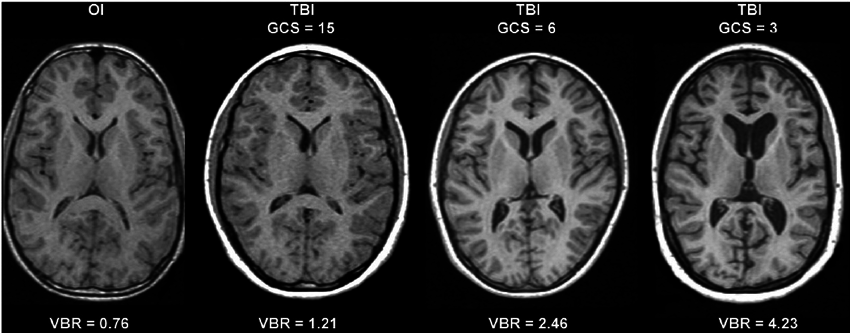
Give Me A Break

On Thursday afternoon, I saw my 59th doctor, a neurosurgeon. At least, I think he was #59. I don’t feel like going back in my previous posts to make sure. I could be like that person who doesn’t want to admit that their birthdays keep happening so they claim to be 29 & holding.

The ride out was long. The conversation with the cabbie was lively. His name was Isaac. I found out he has a wife and five children who still live in Uganda. He goes back every 6-8 months to spend time with them when he has saved up enough money. I can’t imagine having to live like that, my loves living half a world away. He told me about the worst job he ever had (digging pits that were 20 feet deep, 16×16 wide/long with a pick ax and then having to haul away the dirt himself because there was no machinery). The pits were for storing water. We talked about what shocked him the most when he moved to Minnesota the first time, which was snow (before global warming kicked in, the state used to get dumped on so that sometimes the snow would be thigh high) and teenage pregnancy (in his culture, girls would live with their parents until they were married and they never spent time with boys until the marriage happened). We talked about how violent men are towards women in the States, and how women are so accommodating and undemanding of the men, as in, “It’s okay if you don’t work. Here, lemme make you a sandwich and buy you a house.” See? Lots of sharing.

In my appointment, I first talked the physician’s assistant through everything and demonstrated how my symptoms disappear when I tilt my head parallel to the floor. He asked if I had seen the one doctor I had asked to see, and I said I hadn’t. He asked why, and I said, “Because he said there wasn’t anything wrong with me.” The PA couldn’t hide his bafflement. He said it was obvious that my ventricles were completely gone. He did a few of the standard neurological tests like having me squeeze my eyes shut, follow his finger with my eyes, push and pull his arms, etc. Then he went to get the neurosurgeon.

The neurosurgeon came in and after our introductions, he said he had talked to my neurologist. He mentioned that they thought I was overdraining, and I shot that down immediately. I told him that my lumbar puncture came out with a high opening pressure and I hadn’t had anything surgically done since then. I also told him that I had a leak for an entire year so I know the difference between overdraining and underdraining and they are completely different sensations. For me, the underdraining always brings vertigo, fatigue and the facial droop. Overdraining will never bring paralysis for me; instead, I get the tire-iron-beating-me-in-the-skull pain. 

We talked about the fact that there hasn’t been new shunt materials in ages. We talked about the near-impossible task of finding materials that I won’t be allergic to since I’ve had so many already and I’ve reacted to them.

We also talked about the mass that’s growing on my right side. I asked him if it was at least possible to take that out. I’ve been having pain on the right side that radiates down my neck, and if it’s killing brain tissue and turning it to jelly (which it is according to the MRI), then I’d like to get rid of it. However, because of where it is – in my cerebellum – it’s in a bad spot for a craniotomy. As of November it had grown to about the size of a quarter (not sure what size it is now). 

The neurosurgeon doesn’t want to operate on me at this point. He wants to repeat the upright MRI in about six months to check the size of the mass. He expects it to interfere with my coordination; it might be what’s causing my legs to jerk uncontrollably right now.

So, that’s the plan. Follow up in six months. No surgery right now. Wait for the mass/tumor to get bigger and my symptoms to get worse.

Luckily the same cab driver drove me back – he stayed nearby so it wouldn’t be a long wait for me, thank goodness. The office was really way out in the middle of nowhere by city standards. But the ride back was completely different. Isaac was trying to get me to talk, but I couldn’t. I was overwhelmed and upset, and trying (but failing) not to cry in front of this total stranger. It was just a few sniffles, not an ugly cry, thank goodness. 

That evening I got home and received a notice that my primary care doctor is leaving the practice (and maybe even the state). During our last visit in March she had tried to talk to me about palliative care, but said she would wait for me to decide.

Just so I don’t lose my mind, I have to stop pursuing another opinion on the neurosurgery side for the time being. I’m getting a lot of well-meaning advice about how I should just “stay strong” and “keep going” and “don’t give up.” Honestly, though, I’ve been going at this for nearly seven years. This isn’t fibromyalgia, which I’ve had for 20 years – and I’m not knocking anyone who has it, it’s a beast; and this isn’t Hashimoto’s, which I’ve had for 12 years and again I’m not trying to put anyone down, but this is a whole new level of sick. I was able to work through that shit, even if I had to sleep after work and sleep through weekends. My brain is literally being crushed and I have a mass that’s growing in my cerebellum. There aren’t good days and bad days. I need a break from having to be my own advocate for this really rare orphan disease as I drag my sick ass around from neurosurgeon to neurosurgeon to try to convince them that what they are seeing is real (because it’s right there on the MRI).  

In the meantime, I have plenty of other things to keep me busy and other doctors to visit. We just won’t be tapping into my skull right now.

MedCline For Heartburn – A Crazy, Functional Pillow System

Do you suffer from heartburn or GERD? I have, for years. I’ve gone through a number of tests to find the cause of it and also to make sure that the valve between my stomach and esophagus isn’t degrading from the acid backing up (it isn’t). It is the absolute worst feeling to wake up because acid comes up all the way from my stomach into my mouth at night. I’ve also tried a combination of medications, but sometimes they don’t do the trick, and it’s not always safe to be on them long-term. Now I know my acid reflux is likely caused by my mast cell activation syndrome. 

So I saw an ad for this pillow system and decided to give it a try. It was especially appealing to me because I had surgeries done on the right side of my body for three years and had to lay on my left, and had torn up my left shoulder terribly – I’m still doing physical therapy, getting injections and dealing with regular pain continuously now. The base inclined pillow looked like it would help me a lot because it actually has space tunneled out for the shoulder and arm:

What you see propped on top of the wedge is the body pillow that is also available with the system. You can buy the wedge by itself, but honestly, I don’t recommend it; I’ve tried to sleep without it, and it’s not at all comfortable to me. Here’s a pic that shows more of the body pillow, which is filled with memory foam bits:
2016-08-25 11.15.10Both pillows have covers that can be unzipped and washed, which I do often. 

To sleep, I first tunnel my arm through the wedge, and then I wrap my body around the body pillow for support. MedCline recommends that it’s best to sleep on your left if you are able because of the shape and functionality of the stomach, but it’s okay if you aren’t.

MedCline recommends that you buy your pillow according to your height and weight. If you meet one requirement but not the other, I would say go with the height and not the weight, because where the wedge inclines makes more of a difference for you than anything else.

The pillow system is shipped for free and they have a 60-day money back guarantee. MedCline wants you to give the pillow system a try because they know it will take some getting used to, but they believe their product is worth the time and effort. I believe it too. I showed my pictures to my gastroenterologist because he had never seen or heard of it before, and he knows countless patients who sleep in recliners or who purchase traditional wedge pillows or try to sleep on stacks of whatever will keep them propped up at night.

I agree with MedCline – it does take time to get used to. When I sleep on it, I don’t have problems with my shoulder or arm hurting or going numb, and I don’t have problems with my acid reflux. That was my ultimate goal when I bought it.

All You Need Is Your (Whole) Health Back (Movie and Book Review)

Half of the adult population around the globe has some sort of chronic condition, varying in severity. Some are lucky enough to barely be bothered by it except as a reminder on their calendars once every few years to get checked by a doctor for any notable changes. Others can’t move an eyelash without being reminded that their body has taken on a long-term burden and there’s no relief in sight. A huge majority fall somewhere in between. Because of this, and social stigmas falling away regarding the discussion of chronic conditions, the market is being flooded with all kinds of materials and “how to” manuals for coping.

Through the Chronic Illness Bloggers group, I was lucky enough to be given these two products as part of a product review through the Chronic Illness Bloggers network. Although these products were a gift, all opinions in this review remain my own and I was in no way influenced by the company.

The two items that I was given in tandem were a documentary called “The Connection,” and a book called “The Whole Health Life.” I didn’t approach either medium with any expectations, which turned out to be a good thing, because I tend to be very particular and picky – I don’t want my movies or reading materials to be too “preachy,” nor do I want them to assume that I know nothing about my diseases. Most of the time I see manuals out on the market that are written with new patients in mind, not with 20-year war veterans like me.

First, I’d like to cover “The Connection.” I’ll admit, I reached for this first because I didn’t feel like I had the attention span to get me through a book right out of the gate. I was quite pleasantly surprised. It was a good pace, but not overwhelming, while still giving the audience constant reliable information to process. For instance, I learned about “medical hexing” – many patients are told by doctors that we’re not going to get better. Would you believe it if I told you that two weeks ago, my primary care doctor told me that I should just give up and accept that I will never find a neurosurgeon who will be willing to help me with another shunt surgery and who will take my tumor out? Boy, is that ever a hex! But a hex doesn’t have to be that obvious. It can be about giving you a pill rather than looking at your whole lifestyle and looking at what can be improved upon. 

More points from the movie hit home for me, especially since I’m having such a hard time finding doctors who will help me. For instance, if I have zero support – friends, family, doctors – I’m three times more likely to die early. Luckily I have some really great family and friends. Also, belief is part of why we get better, but it takes both the doctor and the patient believing. So far, I don’t have the doctors backing me up. And I also learned from the film that our genes do play a major role in what we do develop as far as diseases go, but our life experiences and our environment also trigger the genes. In other words, you could be perfectly fine but if you go wading knee deep through an oil spill, chances are that MS is going to come leaping out that has been lurking all these years.

So if you haven’t picked up on it, the documentary “The Connection” got my attention. Because of that, I was confident that the book “The Whole Health Life” would be engaging – and it was. And that says a lot, especially coming from someone who has the attention span of a gnat at the moment.

As readers, we can spend more time on the book, relating to what the writer is saying about wading through the soup of pain and foggy brain, trying to get through an able-bodied world and looking normal on the outside. Immediately the author, Shannon Harvey, introduces the core concept: we cannot deal with health by separating “body” health and “mental” health. They are intertwined and inseparable. A pill may address one portion and meditation may address another portion and talk therapy may address yet another potion and engaging in positive social activities may be uplifting, but when consumed in isolation, they hardly make a difference. When combined, they improve a person’s well-being by leaps and bounds. Ms. Harvey breaks it down into 10 topics to easier process and incorporate the practices into daily living.

For me, meditation is difficult. As I mentioned before, my mind is more that of a squirrel than it is a turtle, but she talks about the benefits of calming the mind and recommends a few easy steps that anyone can pick up. Emotions logically follow right after that. What are we doing to process our emotions? What do we allow to play on our inner recording? And then there is the “placebo effect.” Let’s try changing the name of this, the taking of sugar pills and still seeing positive results, as if a patient has taken “real” medicine; what is really at work is the power of belief. The belief that a patient can heal and become well again (or at least have an improved life) that comes with the motion of the taking of the medicine is just as powerful as the drug itself and has been documented for hundreds of years; it’s why people “pray” when it seems all hope for recovery is lost.

Of course, on the physical side, what we put into our bodies and how we move our bodies makes a huge difference. Eating the foods that are the best for us, sleeping the right amount and exercising to the best of our abilities are all important in our recovery and maintenance.

As a “spoonie,” as those of us are known who have chronic conditions that cause fatigue and pain, many of us keep blogs, as I do, as well as participate on social media like Facebook, Twitter and Instagram. We seek out others who are like us. We appreciate having others who understand our daily (and sometimes hourly, minute-by-minute and second-by-second) struggles. I think that “The Whole Health Life” would be a good book to read and re-read because we tend to get stuck in patterns that reinforce the negative feedback loop – myself included. If someone isn’t feeling up to concentrating on words, then they can sit back and watch “The Connection” for some reinforcement.

Please visit the documentary movie “The Connection” here.

You may purchase the book “The Whole Health Life” by Shannon Harvey through Amazon here.

immunizeLABS Has You Covered

Whenever I venture out in public, I try not to think about all of the surfaces that other people have touched, and what they have touched before they touched those surfaces. But I have to. My immune system severely lacks IgG3 and IgG4, which means I can’t fight off microbes like normal people can, and I’m blessed (should I say blessed?) with fibromyalgia and irritable bowel syndrome, which make me more vulnerable to illnesses and tougher to recover. The most recent confirmation that I was born with mast cell activation disease doomed me to vulnerability. I know what I have, I just gotta find a way to fight stuff off. Besides being diligent about washing my hands and not touching my face, what are my options?

I was contacted by immunizeLABS to try five products in the thick of flu season. I have been given these products as part of a product review through the Chronic Illness Bloggers network. Although the products were a gift, all opinions in this review remain my own and I was in no way influenced by the company.

First I’ll cover three supplements: Boost, Shield and PainRelief.
2017-02-04-09-27-07

Immediate basic impressions were that I was thrilled that these were room-temperature stable and that I didn’t have to store them in the fridge. I have so much more success with taking things on a regular basis when I have them sitting in front of me than I do when they are tucked away in a fridge. Also, you’ll notice that the contents are sold in dark blue bottles; most companies will do this when the contents are photo-sensitive and the ingredients degrade when exposed to light.

The most important thing about all of these products (including the items that follow after these three) is that they all contain colloidal silver. Colloidal silver is known to be anti-microbial. In fact, I purchased a quick-drying travel towel that is woven with silver threads because it is specifically anti-microbial. If you have done any kind of studying on your conditions (if they overlap with mine), you know that microbes tend to be our enemy and overtake our systems and are hard to get rid of.

immunizeLABS formulated each of their products to have a specific outcome. For instance, each one does contain different values of the colloidal silver, as well as ginger, cinnamon bark oil and medium chain triglycerides, but then the PainRelief contains curcumin, which has been used for centuries as an anti-inflammatory. You wouldn’t want to leave home without Shield, which included in its ingredients is the all-important vitamin C in a super dose, but there’s also other supportive items that you don’t have in your medicine cabinet. Add Boost to your routine, which includes glutathione, which is a supplement that assists with repairing and building tissues, making chemicals and proteins, and generally “boosting” the immune system. (Their complete ingredient lists are available on their website: immunizeLABS)

The products state to start with 1 teaspoon of product in 2-4 ounces of filtered water in the morning at a minimum of 20 minutes before you eat, gradually working up to 2 tablespoons of product in water over a week’s time. Here are pictures of what each look like before they are mixed in water (left to right: Shield, PainRelief, Boost):

The product labels say the flavors are “chocolate.” This is the only problem I had with the products. I know that these contain all kinds of things that are good for me, but I could never get past the flavor. My dad and uncle owned a hair salon for decades and they taste like what they use for hair coloring. I’m sorry. They just do. So what do you do? You mix it fast and you chug it fast.

So in the thick of flu season, I can say that I have successfully avoided getting taken down by any nasty bugs, despite being out often in public. I’m not sure if my inflammation has been systemically reduced, but not getting sick is huge for me. I did feel more clear-headed – brain fog is a real challenge – and my digestive tract acted like it was on an actual schedule rather than all wacky. I could also tell that my pulse was not jumping around after ingesting the cocktails. When it does, it’s an indication to me that my blood sugars are spiking or I’ve had something I’m allergic to. I will consider this an overall win. 

One of their other products may have helped to protect me, and that is their Breathe Easy Nasal Spray:
2017-02-04-09-29-13
I’m not a sufferer of migraines so I can’t give an opinion from that perspective. However, I often suddenly develop congestion – and I’m not sure if it’s because I’m experiencing a mast cell trigger, or if there’s pressure building up in my cranium from the cerebrospinal fluid building up. The Breathe Easy spray is a mixture of the colloidal silver plus sea salt, certain essential oils, as well as horseradish and cayenne pepper (say what??). I’ve been giving it a couple of pumps before I go to bed as well as when I feel stuffy, or when I come in from being out in public, and again, I haven’t gotten sick and the stuffiness goes away. I also consider this to be a “win.” In fact, you can use this one as often as you feel the need, so I think I’m going to do that right now.

I’m saving my favorite for last, and that’s the OralMiracle.
2017-02-04-09-28-46
I have all kinds of challenges with my mast cell activation disease, including my mouth burning and suddenly developing allergies and sensitivities where I didn’t previously have any. Even commercial brands that are on the market that boast to be alcohol-free still make my mouth burn. I also want to have white teeth just as much as the next person – why should I have to sacrifice that just because I react to strong chemicals? Again, this product contains the colloidal silver to control microbes; imagine how much of a boost it gives your mouth to have that anti-microbial assistance when you’re trying to prevent tooth decay.

The recommendation on OralMiracle is to swish 2 teaspoons for 3 minutes; “The longer you swish, the deeper the healing.” The taste is pleasant and most importantly, my mouth doesn’t burn. They strongly recommend that you don’t eat or drink for the rest of the evening so the product isn’t washed away. My budget is really, really limited right now, but this is the one item that I would spend money on again and again.

Please visit immunizeLABS for their entire line of products as well as their ingredients to make sure that they will be safe for you to use.

How Much Do I Owe The Swear Jar This Time?

A couple of weeks ago I got the last of my fillings repaired as part of the bigger, year-long, multiple visits to the dentist that were caused by me clamping my jaw in my sleep because of the pain in my shoulder and abdomen. I also had to make sure that they marked in my chart that I had slit ventricle syndrome and the tumor because they love to tip me waaaaaaaaay back in the chair and it really messes with the pressure in my head.

There was a mixup with my appointment and they got me back much later than my start time, which caused me to have to call my transportation to pick me up later; unfortunately, transportation had to leave me until 2 hours after I was done, which caused the fluid to build up a lot, which means I was hella uncomfortable and my vision was cut down quite a bit. But before that, I had a weird/comical/maddening exchange with the staff in the back.

I require four times the amount of numbing medication because my sodium channels don’t process pain meds correctly. Both of the teeth we worked on were in my upper jaw, so I ended up being numb up to my forehead. When they sat me up after I was patched up, they told me I could walk to Walmart down the road (as if! No way am I giving them my money!). I said no. They said I could then walk somewhere else. I again said no. They asked me why. In the best way I could with a very numb tongue/lips, I said, “I can’t theecuz oth wuth wrong with ny vrane.” The assistant, who was none too bright, said, “WHAT’S WRONG WITH YOUR VEINS??” I said, “No. Ny vrane. Vrane.” And I pointed at my head. The assistant dentist asked what was wrong, and I said, “I can’t do anyfing vat vill nake ny vlood mressure go umph. I cood have a stroke and nigh.” The assistant dentist asked what the doctors were doing to help. I said, “I can’t fine anyvun who vill take ny case. I’n lergic to da shuns. I need to fine stuff I wone vee lergic to.”

Then the dental assistant piped up and said, “Well, I don’t blame the doctors. I’m sure they don’t want to feel bad if it doesn’t work out for you.”

I shot her a look and said, “I cood die wifout helf. Da pressoo keefs goin’ uf in ny head and if I can’t get sunfing in to work, it vill kill nee.”

Without hesitating, she said cheerfully, “Well, I can see both sides.” Like we’re debating whether to have fish or chicken, instead of whether or not it’s better to kick the bucket to spare doctors’ feelings. She stuck with her “too bad for you” attitude.

At the end of December, my case was referred to the top neurosurgeon in the Minneapolis/St. Paul area after it was discovered that my brain had literally collapsed under the pressure, as well as started growing a tumor from the scar tissue that was left in from a previous shunt that is now about the size of a quarter. I know he got the radiology report that listed all of my symptoms. I know he got the impressions from the neurologist because he seemed to answer her question about whether I’m overdraining.

His reply was that my brain was fine and the tumor was no big deal. He also said the shunt isn’t overdraining. Now I’m not allowed to see him either. 

Here’s the deal: I know I’m not overdraining. If I were, I wouldn’t have high opening pressures every time they do a lumbar puncture. The overdraining assumption is strictly my new neurologist’s misunderstanding of slit ventricle syndrome – she’s trying to make my symptoms fit, instead of paying attention to what’s going on. Second, the brain tissue around the shunt and the tumor is turning to jelly. This isn’t normal and it’s a big deal. Third, the tumor is causing measurable cognitive damage. Fourth, and I’ll show you pictures, but my ventricles disappeared, and my brain has literally collapsed.

mymriscreenshots

I have new insurance that started on February 1st that comes with an advocate and a care coordinator, so I’m waiting for them to contact me, which is the norm. I smell a lot of research in my future for trying to figure out what I can try for the next shunt system, and I’m not looking forward to it, but I also know no one else will do it but me.

Have a G’Day Every Day with Oska Pulse

***Scroll to the bottom of this review for an updated offer starting in January 2019! A new, improved Oska Pulse is now available, with a better grip and longer running cycle. Just use my coupon code of SICKDATING.*** And as of March 2020, I used it to take down the inflammation in my chest due to costacondritis – inflammation of the cartilage in my sternum. Boy, if you’ve never had that, it feels like a donkey kick to the heart.

People often ask me just what it is that I do with all of my time now that I’m stuck in bed. I love writing and I count myself lucky to have been included in the Chronic Illness Bloggers network, and given many opportunities to try products I wouldn’t otherwise have access to. I have been given this product as part of a product review through the Chronic Illness Bloggers network. Although the product was a gift, all opinions in this review remain my own and I was in no way influenced by the company.

First, let’s talk about pain. I’m an expert on it. I’ve been an old lady since about the age of 23, when I got my first diagnosis of fibromyalgia.

It hasn’t stopped there. Now that I’ve had 10 brain surgeries and have been bedridden for 10 years, I have some very specific challenges. Staying in bed triggers the fibromyalgia. But I have to lay flat because when I’m upright, fluid pools in my brain and presses on my midbrain and spinal cord and causes all kinds of balance, vision, and pressure issues, and puts me at risk for seizures and strokes.

For three years I had surgeries on the right side of my body and could only lay on my left side. That put tremendous strain on my left shoulder. Four times now I have had to go through physical therapy to treat an impinged (“pinched”) nerve in the shoulder. For this last year, however, the pain was much, much worse – so bad, in fact, that I broke six teeth because I was clenching my jaw in pain. My doctors finally figured out that I had torn tendons and the actual capsule that houses the shoulder bones from all of the time I spent on that side of my body.

We tried everything: ice, heat, anti-inflammatory meds, low-grade opioids, muscle relaxants, meditation, stretching, a brace during waking hours, a brace during sleeping hours, multiple injections, light weights, joint manipulations…everything except sacrificing a chicken. For an entire year, I was in incredible pain. I couldn’t even close a cupboard door.

The surgical site side was changed to my left, so I started having to sleep only on my right. That gave my left shoulder a break, but then I started having problems in my right hip. I have to use a cane for walking because of my terrible vertigo and I walk with the cane in my right hand because I’m right-dominant, and I knew I was really going to be in trouble if both sides of my body were going to be rendered useless by pain.

Then I was contacted by Oska Wellness, Inc. to try the Oska Pulse.
Oska_1200x628px_1

Where do I begin? First, it actually physically looks too good to be true. That was my first, honest thought. How could something so small and seemingly simple do what nothing else that doctors were trying to achieve for an entire year, throwing everything they had at me? I mean, come on – a little space ship? And we all know about those devices from those ads on TV that never amount to anything but you can get them for 3 easy payments of $29.99, and they sit in the back of your closet until you move or you divorce…

But the Oska Pulse isn’t that.
2016-11-21-13-16-08“Oska” – Australian for Oscar, the name of koala who was helped by this device after he was badly burned by a fire!

The Oska Pulse is a battery-operated, rechargeable device that gives off a pulsed, electromagnetic field to treat pain and edema. That’s the very simple explanation.

So the Oska Pulse turned into my chicken sacrifice, if you will. The note card that came with it suggested that for chronic pain, I should wear it 4-6 times at the site of pain for the first week. I immediately pushed the little round button that you see at the bottom of that picture above and placed it on my shoulder.

Now, the Oska Pulse comes with a stretchy sleeve with Velcro closure if you want to strap it on and have it stay in place. I tried that, but since I don’t get up and move around much, I quickly determined that I didn’t need to do that. You can see by the fuzz on the device that there is some grippy rubberized material on the Oska Pulse that is good for keeping it in place. All I had to do is prop the Oska Pulse on my shoulder, press the button, and let it do its thing until it beeped at me three times to indicate it was done.

After the fourth day, I started to notice a difference in my shoulder. I could pick up items heavier than a magazine or an empty toilet paper roll. People, this is huge: I already automatically lost the use of one hand because it was always occupied by the cane I had to use to assist me with walking. I can’t stress how bad this was, especially since only yesterday I got the last of my teeth replaced from all of those that I had broken in pain. I started being able to reach all the way over my head, and I was able to increase both my repetitions and the weights of my physical therapy exercises.

So after I saw success in my shoulder, I started moving the Oska Pulse around my body. This little guy was getting a workout! But that’s okay! The Oska Pulse stays charged for about 15 sessions, and then it needs another charge. The charger can be hooked up to a laptop or it can be plugged into the wall socket, as it has both capabilities. 2016-11-21-13-17-132016-11-30-17-18-36Here is the Oska Pulse in action, in the elasticized sleeve with the blue pulsing light on. You won’t feel a thing, truly. There is no buzzing, so the blue light will be the only way you know that it’s on. Are you shocked? You shouldn’t be! This is a device where taking away your pain will be completely painless. That is the best part about the Oska Pulse.

I didn’t tell my physical therapist about the Oska Pulse when I went in for a visit after not seeing him for a month. He was expecting to see as much improvement as he had seen the previous months, which was zero. Instead, he was stunned to see me lifting my hands over my head, bearing weight, and best of all, wearing an underwire bra that clasped in the back (previously the girls had been relegated to a sports bra that I could twist into with one hand that left them sadly sagging and flopping like I’m undeniably mid-40’s, which I am, and does nothing for me being able to attract potential suitors, even under false pretenses). My physical therapist was ready to doubt me or tell me to back down, stop being so enthusiastic, to slow my roll; but he nearly fell over with how well I was doing. He was stuttering.

This is a long post, but hang with me a little longer. I gave up my Oska Pulse, and potential pain relief for a time, because I wanted to know if it was just me. Was I just thrilled to get this product and was I blinded by the blue light?

I had given the team at Oska Wellness a heads-up that I might be doing this, but I gave the Oska Pulse to my sister for a test drive. I didn’t tell her much – only that she needed to charge it if it didn’t stay on for at least 30 minutes when she turned it on, and that she should wear it on spots that she was having pain. I gave her the instructions, the charger, the unit, and the stretchy band with the sleeve, and set her free. I did tell her that it worked for the COO’s dog when the dog was in pain because I knew that would tug on my sister’s heart strings – her dogs come with her to work every day, and we are all suckers for their love. If the Oska Pulse objectively worked for the dog, why couldn’t it work for us?

She made an effort to religiously wear it for two weeks, during which time we didn’t discuss the Oska Pulse at all. She didn’t tell me where she was placing it or how often she was using it. At the end of the two weeks I asked for it back and checked in with her. She had decided that she needed help with her neck. The easiest way for her to wear the Oska Pulse was to slip it into the flipped down hood of her hoodie – she didn’t even have to strap on the elastic band, and no one had to know she had the Oska Pulse going. She opted not to try to sleep with the device going and just deal with it during waking hours.
Oska_720x300px

Her conclusion: She has greater range of motion in her neck and less pain. She used it only on her neck and no other areas of her body. I’m not going to reveal her health conditions, but they are just as serious and chronic as any of my fellow chronic illness bloggers. I honestly don’t know if she’s going to be missing it in a few days, but I can tell you that I missed the Oska Pulse terribly while she had it, because pain started to creep back in. Now that it’s back with me, I pretty much have it duct taped to me – I’m not going to give it up again. I have it working on my right hip and the bursitis that has developed there.

Feel free to find out more info on their main website at Oska Wellness or on Facebook at Oska Wellness (Facebook).

Informational: A third-party, independent study showing that Oska Pulse can significantly reduce pain and improve mobility.

And isn’t it great when you can actually see that the Oska Pulse is clinically proven to reduce pain, like it is here in this study? It’s a double-blind clinical trial with a placebo! Super science!

Benefits of ordering a Oska Pulse device:
– Drug free
– No known adverse side effects (but please keep away from medical devices affected by magnets including pacemakers and adjustable shunts)
– Internal battery lasts up to 4 years
– 30-day money back guarantee!

NEW FOR JANUARY 2019:

The NEW Oska Pulse is now available for $399, but you may also use my coupon code of SICKDATING and get $55 off for a total purchase price of $344! Its running time is 90 minutes per session and it will run 20 hours before requiring recharging.

Also new for 2019:
I managed to develop CRPS (Complex Regional Pain Syndrome) in my right hand and wrist. They swell up quite large if I use them at all, even for simple things like grasping a page or two of paper. The Oska Pulse was successful in bringing down the swelling after only two sessions. Although it hasn’t cured my CRPS, I am using my Oska Pulse like crazy to help manage it.

Here is a video explaining and demonstrating the Oska Pulse!
https://www.youtube.com/watch?v=dpo_Bk91InA

Can You Repeat That?

The last couple of weeks of December were a revelation.

I spent 20 years away from my family over the holidays, and I learned very early not to make a big deal out of the days we had off in November and December. When I’ve had serious boyfriends and we’ve lived close to their parents or grandparents, I’ve ended up at their houses, but if not, I’ve stayed at home and cooked whatever I’ve wanted to eat and overloaded on movies. A few times I’ve gone to friends’ houses – and one time that I did that, bringing my most recent ex with me, is a story still told today. My friend’s mom introduced us as, “Hi everybody, this is Chelsea, and this is ______, and they used to be boyfriend and girlfriend, and now they’re not, so I don’t know.” This was about 18 years ago, and when I reminded my friend, she started reminding her mother, and her mother finished the story, so yeah, it’s still fresh in her memory.

This holiday season really felt like a roller coaster. I received the results from the upright MRI. Just a few days after that, I received some medical records from a doctor I had seen one time for 20 minutes in August of 2015 when I was trying to find a primary care doctor who would take me on as a patient. I remember this one visit because the doctor had been so friendly, but I knew she was struggling with understanding the complexity of my conditions, and I had to repeat some information. I carried my previous records with me but she wasn’t interested in looking at them, she just wanted me to tell her again.

I was relieved at the end of the visit because it seemed like she was willing to take on the basic care like ordering my thyroid and cholesterol labs for my Hashimoto’s stuff. But then a week later I received a call stating that I had to find a new primary care doctor because she left the practice – she received notification that she passed an exam for a different field. I was floored. If you’re anticipating leaving, why take on new patients??

But the real kicker is getting her notes from that 20-minute visit now. Because I had to repeat myself, she wrote that I was “bragging” about my surgeries, and that I had Munchausen’s.

It’s really hard to read that in the same week that I received results saying that my brain has literally collapsed and I have tissue growing like a tumor and doing damage to my memory and speech. (Today I couldn’t remember why I called the county regarding picking out a vendor for medical assistance.) I still have a hard time talking about what’s going on, to get the words out. It’s serious. What’s happening is that the pressure in my cranium keeps rising, and it’s going to keep rising until it’s the same pressure as my blood pressure and I have a massive stroke and die. The two methods they have of treating it don’t work for me. First, the medication to reduce the CSF production has been proven not to make any difference for me. It’s been tried multiple times. Second, implanting another shunt isn’t going to work; I’m allergic to them all. I’m now at the point where I clog them and strangle them within days. I simply don’t have options at this point.

I also just got notes from a neurosurgeon from the University of Minnesota that I saw a year ago, from one of the guys I have nicknamed the Three Stooges. He was one of the three doctors who saw my MRI from July 2015 that had the beginnings of the slit ventricle syndrome and a smaller version of the tumor, and observed my fatigue, vertigo, facial droop, unsteady gait, and resolution of some of the symptoms when I tilted my head to move the fluid around. In my file he wrote that I “walk with a cane and can’t perform a tandem walk” but that I’m “fine.” He also stated that if anything changed, they would welcome me back to the neurosurgery department.

Fuck that. He’s not going anywhere near my brain when I’m unconscious. He obviously can’t handle it.

But the one bright light in all of this swamp of shit was that on December 27th, I received a voice mail from a case worker with the State of Minnesota. She simply stated her name and said that she approved my case for disability. As soon as I heard it, I immediately burst into tears. Being approved by the state doesn’t mean that I receive any kind of financial compensation, but it does assist me when I’m applying for housing – I can officially state that I’m disabled – and I also qualify for medical assistance as a disabled person instead of just a person living at or below poverty. It will also help to make my case stronger when it comes time for my hearing with the federal case, which I still don’t have a date for yet. My attorney thinks it’s still “some months” away.

Gold, Frankincense, Myrrh, and Brain Damage

Happy Holidays! Froeliche Weihnachten! Happy Hanukkah! Happy Kwanzaa!

What is Santa/Kris Kringle/Krampus/Monito-monita, that crazy, overgrown elf/Viking who has nothing to do with a mythical baby born in a stable bringing you this winter solstice/Christmas/yule?

I already got my gift, but nothing like what the three wise men brought across the desert. At the beginning of November I saw a new neurologist who agreed to give me everything that I seemed to be missing: an upright MRI, a neuro psych test, and keep me on as a patient, as confusing as my case is. Three days after our initial meeting the doctor who administers the neuro psych tests had a cancellation so I didn’t have to wait four months. A neuro psych test is a series of tasks to evaluate my real brain functionality – not just the few words a doctor might ask you to remember a few minutes later, like “pencil,” “dog,” and “purple.” I had to take many different kinds of timed tests, including drawing, making linear connections, making word associations, and answering personality questions. That’s the short version.

I didn’t have any problem with drawing pictures from memory. I was shown simple lines and boxes and then given a blank piece of paper a half hour later and could draw them in sequence perfectly. However, when it came to things like giving a list of words that began with a certain letter in the space of 60 seconds, it was like the bottom of my brain fell out. I could only give four words for the letter “A,” and they were very simple words like “an” and “apple.” There were four letters total, and each letter was a challenge. I can only remember the letter “A” at this point.

There was another exercise where the tester gave me a list of words that included pieces of furniture, animals, and modes of transportation. Every time I repeated the list back, I always tried to give it back in order, I never tried to group everything together in like groups. It never occurred to me. However, if I had full functionality, it probably would have. I also could never remember more than a few words, even though I’m guessing the list was repeated more than 20 times.

They wanted to see how I could do with repeating numbers back, so they started with three numbers, then four, then five. As soon as I got to five, I started struggling. At six, I couldn’t repeat any numbers, not even the last two or three of the group. Again, it was like the bottom of my brain dropped out.

There were many other tests, but in the interest of space and to save some face, I’ll stop there. You get the idea.

A few weeks later when I could meet with the doctor who administered the test, she confirmed what I dreaded hearing but suspected: I have brain damage. Since I’ve never had an evaluation done before there’s nothing to compare it to, but she said she could tell that in some areas my knowledge base and functionality was “superior,” or above the level of a college-educated woman. However, the brain damage affected my memory and speed and speech and brought those areas down to true mental impairment.

A few days ago I went into the office for part II of my follow-up to look at the actual scans of my upright MRI. My MRI did not look good.

normalventricles

Above is a progressive MRI scan of a brain (not mine), moving down from top to bottom. As you move further down, you notice that the part in the middle gets larger and darker; that’s the ventricles. They are the four chambers that are the gold standard for figuring out if there’s a problem with CSF in the brain. This is what normal looks like.

Unfortunately, I don’t have any ventricles left. All of them have collapsed. My brain is pressing on the brain stem and I’m having all kinds of unusual problems, like my legs suddenly jerking if I’m standing and I look down briefly. Of course I have the problems I’ve always had, like the vertigo and the fatigue, and that pesky facial droop and ptosis (pronounced “toe-sis”). My new neurologist insisted that the disappearance of my ventricles must mean that I’m overdraining, but I knew that I must be suffering from Slit Ventricle Syndrome, and it means just the opposite – the pressure is crushing my brain.

UCLA has a pretty good explanation of Slit Ventricle Syndrome. I’m 100% certain that my shunt is “nearly blocked but barely flowing.” I always, always feel like my intracranial pressure is extremely high. It’s exhausting. So for now, it looks like I have Slit Ventricle Syndrome, and I’m not sure if this would have been picked up before this point – at least not two or three years ago, even though the symptoms are the same. I don’t recall that my ventricles have looked this horrific in all of my 20+ prior MRIs.

Also troubling is trouble brewing at the back of my skull. In 2013 I had two cisternoperitoneal shunts placed when my neurosurgeon was trying to find anything, anything, that my body wouldn’t reject. After we removed those and I ended up with a ventriculoperitoneal shunt, he barely got the old one out after a lot of scraping and pulling because of the scar tissue that had built up along the tract. A surgery that should have been an hour and a half turned into five hours and I was left with a huge highway of bruising from my head to my abdomen.

Unfortunately, he thought that it wasn’t detrimental to leave scar tissue in my head, and in fact may help to plug the burr hole where he drilled for surgery so I wouldn’t have any leaks. I knew what it was like to have a CSF leak; 2014 was incredibly painful when I had a leaking shunt for that whole year. The scar tissue has been increasing in diameter and it’s now growing like a tumor. From what I can tell it’s about the size of a quarter, and it’s pressing on the area of the brain that deals with memory and speech. It’s actually a long rope but it’s got a huge bulb, and if I press on the burr hole, it yanks on the area it’s attached to right behind my ear.

In plain English: My brain is being crushed. My shunt isn’t working. I’m growing my own tumor that was started by my scar tissue.

My challenge is that I’m allergic to the shunt materials. Also, now that the scar tissue is turning into a growing tumor, can we take it out without creating a leak, and when we pull it out, will the area it’s damaging have permanent damage or will it heal?

Also, can I fucking qualify for disability now? Everything that I’m reading about Slit Ventricle Syndrome says that it’s a permanent condition – there’s no going back.

Within the next few weeks (because of the holidays messing everything up) I’ll find out when I can get in with the best neurosurgeon in the Minneapolis/St. Paul area. He came highly recommended by other hydrocephalus patients when I attended the hydrocephalus conference including the mother of Olivia, the young woman who had 123 surgeries since birth and who is now aged 20.

I am also in the process of finding an occupational therapist for an evaluation that can be included in my records for my attorney and disability case.

I’m going to share the most personal thing I possibly can and have up to this point, because some of you may doubt how much this has affected me because I have created coping mechanisms. It has taken me two full days to write this post and writing even the simplest words is sometimes a struggle. But the hardest thing for me to do to date was to send out holiday cards. At one point I had to stop writing for about a half hour because I broke down in tears. Hand writing words without the benefit of being able to go back and erase them and rewrite them like I do in the computer almost caused me a panic attack because I could no longer remember how to write even single-syllable words. For the people who did get cards, there was a lot more crossing out and scribbling than I would have liked. Maybe you noticed that I started to write an “E” where there should have been an “L” first. Sometimes I couldn’t even remember how to write my own name correctly – I would skip letters.

I don’t have all of the answers. I still – STILL – don’t know what’s causing the imbalance with the CSF in my brain. I don’t know if taking out the scar tissue/tumor is going to alleviate the memory and speed problems. I don’t know if I’m ever going to be able to tolerate an appliance in my body. I definitely don’t want to hear, “But you look fine!” or “Have you tried _____?”

.


New News

First and foremost, my friend Nicole (Nikki) Seefeldt finally got her lungs on December 2nd after a very long listing. Hers was the very first blog that I followed here on WordPress, and she suffers from not one, but two, rare diseases. Her listing for new lungs was much longer than she anticipated but she did not let that deter her from staying on course with her exercising to make sure that her recovery got off to the best start possible. Please, if you have no medical reason that your tissue or organs would be rejected, sign up to be a donor. All of my friends who have been organ recipients are eternally grateful.

Please check out her blog and progress here: As I Live & Breathe

Second, I was considering traveling to Washington D.C. in February to participate in their Rare Disease Week to learn how to effectively communicate with lawmakers. I applied for a travel grant and was participating in a large conference call where we were going over the details of the week and what would be awarded if we got the nod on our travel scholarships when the woman running the call received a notification that the Senate passed the bill for the 21st Century Cures. A week prior the bill had passed through the House. While we were on the call, she had started crying and then had to explain that it had taken two years to get the bill to pass – and with very little resistance from either major political party. The bill passed in the Senate with only five opposed. She then stated that President Obama indicated that if the House and the Senate passed the bill, he would absolutely sign the bill into law, with no hesitation.

Global Genes has published an article and hosted a podcast with me as a guest in the past. They are also the major partner in the rare disease week in February in D.C. that I may or may not attend – I may not be able to handle the grueling travel and having to be upright. But they have been fantastic about getting the word out about this bill and about keeping all of us connected in the rare disease world.

A lot of rare diseases are diagnosed during childhood, as is what happened with Nikki. However, I have rare diseases that haven’t been recognized until adulthood, and even one that we’re still not sure of. Some children don’t survive to adulthood. All of us have a better chance at a quality life if we have medications and treatments that don’t require a decade of testing before they are approved. There is no reason for us to stop advancing science to find answers. We will never run out of discoveries.  

Product Review: TMedPharma (3 Products)

People often ask me just what it is that I do with all of my time now that I’m stuck in bed. I love writing and I count myself lucky to have been included in the Chronic Illness Bloggers network, and given many opportunities to try products I wouldn’t otherwise have access to. I have been given this product as part of a product review through the Chronic Illness Bloggers network. Although the product was a gift, all opinions in this review remain my own and I was in no way influenced by the company.

First, I’m going to throw a definition your way that I recently used for another review, and that is “medical food”, which this product falls under and is defined by the FDA:
“The term medical food, as defined in section 5(b) of the Orphan Drug Act (21 U.S.C. 360ee (b) (3)) is ‘a food which is formulated to be consumed or administered enterally [orally] under the supervision of a physician and which is intended for the specific dietary management of a disease or condition for which distinctive nutritional requirements, based on recognized scientific principles, are established by medical evaluation.’”

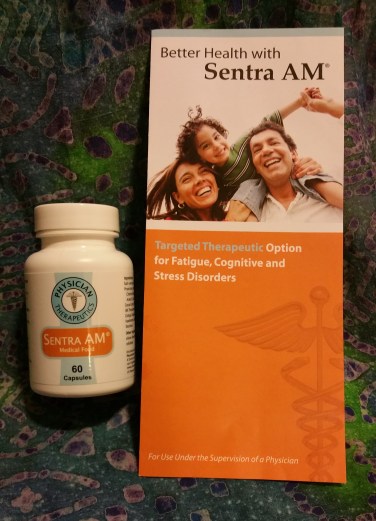
Targeted Medical Pharma, or TMedPharma for short, is producing items that are considered “medical food” that are therapeutic doses of specific ingredients meant to treat certain conditions. I was given three products because I suffer from autoimmune conditions – namely fibromyalgia, but possibly others that are still a mystery – that produce irregular sleep, overall inflammation, and fatigue.

First, I was given Sentra AM; the instructions state to take 2 capsules on an empty stomach. 2016-10-23-06-11-43
This is where I really have to pay attention. I have Hashimoto’s thyroiditis, so I take levothyroxine (brand name is commonly known as Synthroid) on an empty stomach every morning an hour before eating. It is very, VERY important to not take certain supplements or eat certain foods within four hours of taking this medication, so I had to check the label to make sure there wasn’t any vitamins C, calcium, or iron to stop my medication from working. The label states that the Sentra AM doesn’t have added sugar, starch, wheat, yeast, preservatives, or flavor. What it does have is an amino acid combination, ginko biloba, cocoa extract, and hawthorne (as in berry, which I take daily to support my heart and cholesterol issues). Also, I’m sometimes out of it in the morning, so I do this to remind myself of how many to take:
2016-11-20-13-23-29Taking the Sentra AM didn’t have me climbing the walls, but I also wasn’t dragging, so it was a nice change. I took this for the entire three months’ supply that I was given and I never had any adverse reactions, which is great because I’m allergic to so many things. My energy pickup was subtle. I’m not certain that I would purchase additional bottles…but ask me a month from now when we are in the dead of winter and I have zero zip, and I may be singing a different tune.

Theramine is the “medical food” taken twice daily (2 capsules) to reduce inflammation. This one must also be taken on an empty stomach in order to be most effective. Theramine also contains a different amino acid combination, as well as GABA (gamma amino butyric acid), cocoa extract, Griggonia extract, grape seed extract, and cinnamon. Sometimes in products that are anti-inflammatory I experience allergic reactions because they have sneaked in some form of fish oil, but I didn’t see any on the list and no warnings, and I didn’t experience hives or wheezing, so I think I was in the clear. They state that the product does contain milk (in the enzymes, most likely) but does not contain added sugar, starch, wheat, yeast, preservatives, or artificial color.

2016-10-23-06-12-47
I am going to impart some knowledge that I found out from going to a naturopath for years. If you take these products on an empty stomach, you will reap the benefits of anti-inflammation ingredients throughout your body. If you eat when you take these products, at best you will only feel benefits in your digestive tract. Take these one hour before eating or two hours after eating solid foods to make sure that you maximize the benefits.

After three months on Theramine, I have mixed feelings. My pain relief from a reduction of inflammation was subtle, if that is what happened. During these three months I was still dealing with the tears in my left shoulder tendons, which were extremely painful, and could have used the extra support. I also have just as much pain from the inflammation in my abdomen from the allergy to my drainage catheter to my shunt in my brain, and I’d love to have the stabby-stabby pains calm down. Generally, though, I felt less achy.

The third product was Sentra PM, targeted for sleep disorders associated with depression. Oh, did I mention that fibromyalgia patients, and indeed all chronic illness patients, are prone to depression? We are. Fibromyalgia patients fail to get into the sleep that brings on REM, so we rarely reach deep sleep, and we are forever exhausted. It’s a vicious cycle. We’re tired, so we go to bed, but we can’t get deep sleep, so we’re tired, so we go to bed…and often we’re told that our disease isn’t real, or we’re doing something wrong and that’s why we feel physically terrible, or that there’s nothing that will make us feel better. Enter TMedPharma with something to try to assist us in tackling this problem!
2016-10-23-06-14-21
Two capsules of Sentra PM should be taken at bedtime to promote restful sleep. I have a terrible time falling asleep and I haven’t used an actual prescription medication like Ambien for at least 13 years because of the terrible side effects (no, no getting up in the middle of the night and eating a gallon of ice cream or going to the bathroom in my clothes closet), because the morning after I would be a walking zombie, barely able to brush my teeth (sorry, former co-workers).

I’m very cautious when trying something new when it comes to messing with my sleep, so I started this on a Friday night when I knew I wasn’t expected to wake up the next morning for an appointment, and I didn’t feel like I experienced prolonged effects. The active ingredients include choline, GABA, glutamine, histidine, and tryptophan. The pamphlet states that Sentra PM provides the amino acids that are precursors to neurotransmitters that are responsible for initiating sleep. There were nights when I felt pretty tired about 30-45 minutes after taking my dose, but then there were nights when absolutely nothing could help me, and those were the nights right before big appointments and anxiety was getting the best of me. But overall, if I were to make a purchase, Sentra PM would be my first pick.

Targeted Medical Pharma strongly recommends consuming these “medical foods” under the guidance of a physician to make sure you are reaping the most benefits and not experiencing any unwanted side effects. This is something that you should take seriously; it IS possible to take too much of a supplement and cause unintended harm, and of course there is always the risk of being allergic to something.

Please check out their complete line of products on their website: Targeted Medical Pharma